Geometry and Measurements
This week we will discuss weeks 8 and 9
GEOMETRY AND SPATIAL SENSE
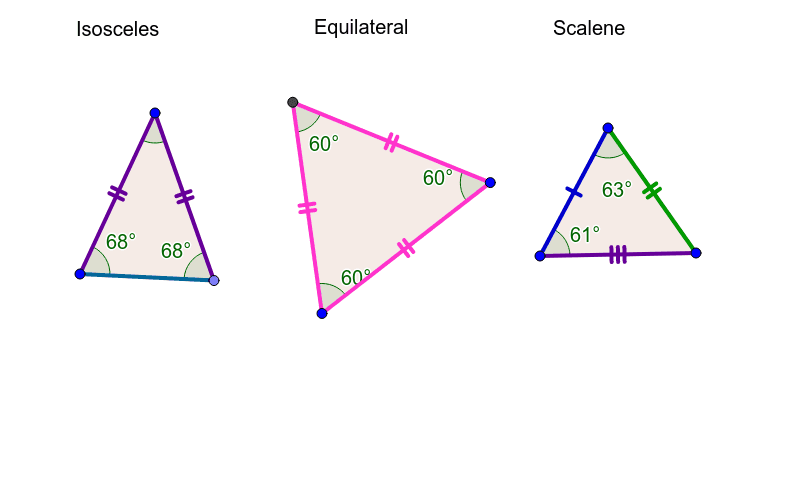
In week 8 we discuss geometry and spatial sense. It was a great way to refresh skills that I have not used in a while.Our learning activity presentation was done by my classmate Lilliana. She cut out plastic straws to use as manipulatives. Each straw was a different measurements, we used the straws to model different types of triangles. We where to construct scalene, isosceles and equilateral triangles.
This was a great activity because it allowed us to use manipulatives to visually see the differences in triangles.
 We also used connecting sticks to model triangles. Each stick had a different size. Our teacher challenged us to try to create a triangle which had two side lengths that could not touch. As seen in the image.
  After our learning presentation we began our lesson. We began by discussing Reflective Symmetry the "fold line" which is the axis of symmetry. We where to draw a parallelogram in order to turn the shape in different orientations to represent the line of symmetry. We then discussed Rotational Symmetry, meaning the shape looks the same after a rotation. (As seen in the photo to the right) This week in our Game Forum, I was the resource manager. I chose a game called Four Piece Tangrams
It requires students to rotate and flip unfamiliar shapes either horizontally or vertically. The goal is to position the shapes so that they fit perfectly in the provided space.
The Ontario Math Curriculum defines Geometry and Spatial sense by the following terms: p.9
- awareness of one’s surroundings and objects in them
- geometry help us represent and describe objects and their interrelationships in space
- insights and intuitions about the characteristics of 2D shapes, the interrelationships of shapes and the effects of change to shapes are important aspects of spatial sense.
- students develop their spatial sense by visualizing drawing and comparing shapes and figures in various positions

Measurement
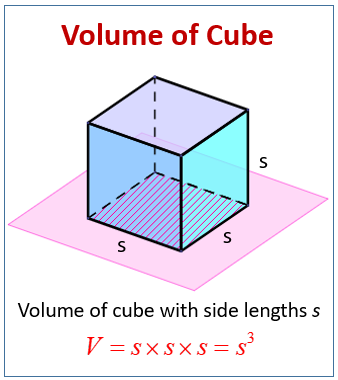 In week 9 we talked about measurements. My classmate Kalby began our session with her learning presentation activity. In her activity had us fill out a worksheet on volume and area. This activity was effective because it reminded me of the equations of volume and area of cube and rectangle.
  In class, we learned about Area and Perimeter. We had to add squares to a given figure in order for it to have a perimeter of 18 sides. We had to determine how to achieve this with the fewest, and most amount of additional squares.
This was challenging but engaging!

Furthermore, the game forum post this week was on a game called Rocket Angles. This game requires students to determine the exact angle between two objects. I believe this game is important because there are minimal instructions, students must problem solve in order to represent the desired angle. It also requires students to be very specific with the degree of the angle that they submit, so it works on their accuracy skills.
My role was the Facilitator, I had to ask two questions:
1. Considering this game may be easy to some students, how can you make this game more challenging for them? What would you do for students who find this game too challenging?
2. At what point during your math period would you have students use this game?
images:


Comments
Post a Comment